


Why Backscatter Vehicle Scanners Detect Organic Threats Better Than Conventional X-Ray Systems
- Omar Al-Kofahi
- Jun 22
- 5 min read

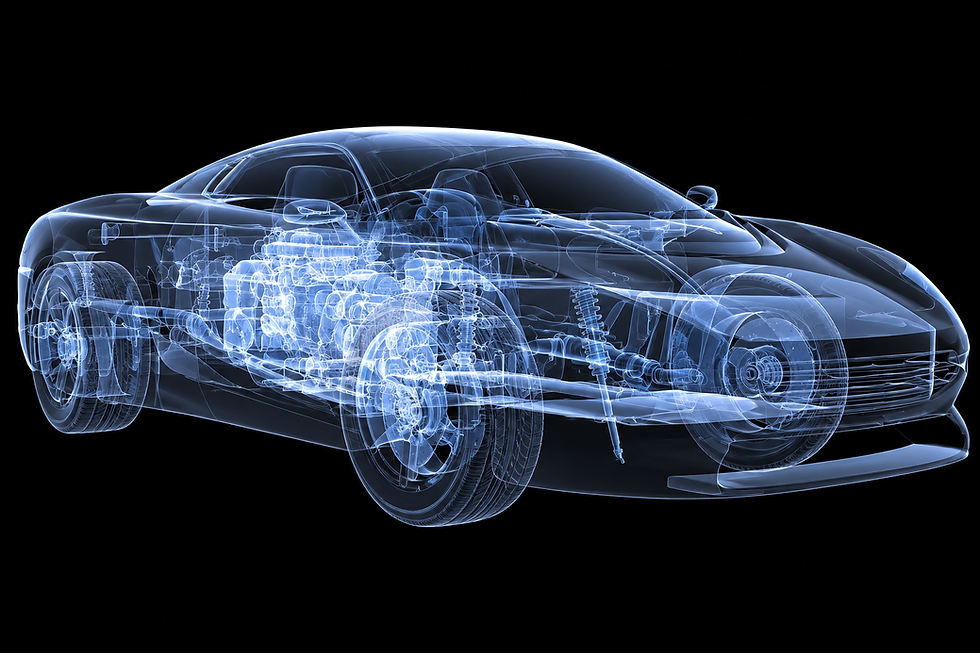
Modern security operations face increasingly sophisticated threats hidden within vehicles, cargo compartments, and transportation networks. Security teams responsible for border crossings, ports, military installations, critical infrastructure, customs facilities, and high-security checkpoints require advanced inspection technologies capable of detecting more than just metallic objects and dense materials.
A backscatter vehicle scanner plays an important role in identifying organic materials, narcotics, explosives, and other low-density threats. When used alongside transmission X-ray technology, it provides complementary imaging that helps security teams gain a more complete view during vehicle inspections.
Understanding the differences between backscatter imaging and conventional X-ray technology is essential. The ability to detect organic threats accurately can significantly improve security outcomes, operational efficiency, and long-term return on investment.
Organizations looking to strengthen their vehicle inspection capabilities often explore advanced screening solutions alongside the technologies featured throughout the Seethru AI platform to build more effective security programs.
Understanding the Difference Between Backscatter and Conventional X-Ray Technology
Vehicle inspection systems use X-ray technology to identify hidden objects without requiring physical searches of every vehicle. While both conventional transmission systems and backscatter scanners use X-rays, the way they create images differs significantly.
Conventional transmission X-ray systems measure the amount of radiation that passes through an object. Dense materials absorb more radiation, creating contrast within the final image.
Backscatter technology works differently. Instead of measuring radiation that passes through a vehicle, it measures radiation that scatters back toward detectors after interacting with materials inside the vehicle.
Because each technology captures different information, transmission X-ray and backscatter imaging complement one another. Together, they provide inspectors with a more comprehensive understanding of vehicle contents and concealed threats.
Conventional Transmission X-Ray Systems
Traditional transmission systems are highly effective for detecting:
Firearms
Metallic weapons
Dense machinery
Vehicle modifications
Structural anomalies
Heavy contraband
Transmission X-ray remains an essential component of modern vehicle inspection, providing excellent visibility of dense materials and structural anomalies. When combined with backscatter imaging, inspectors benefit from complementary perspectives that improve overall detection capabilities.
How a Backscatter Vehicle Scanner Works
A backscatter vehicle scanner captures radiation that reflects back from materials inside the inspected vehicle. Organic materials contain elements such as:
Carbon
Hydrogen
Nitrogen
Oxygen
These elements generate stronger backscatter signals than many dense inorganic materials. As a result, organic substances often appear more prominently in scan images. This enhanced visibility complements the structural imaging provided by transmission X-ray, making backscatter especially valuable for detecting organic and low-density materials.
Why Organic Threat Detection Is a Growing Security Priority
Security agencies increasingly face threats that are not primarily metallic in nature. Smugglers and criminal organizations frequently rely on organic materials that are easier to conceal within legitimate cargo and vehicle structures.
Common organic threats include:
Threat Type | Typical Composition | Security Challenge |
Narcotics | Organic compounds | Difficult visual identification |
Plastic explosives | Organic-based materials | Low density appearance |
Smuggled products | Mixed organic substances | Hidden within cargo |
Human concealment | Organic body mass | Complex concealment locations |
Agricultural contraband | Organic matter | Similar appearance to legal goods |
While transmission X-ray provides valuable structural information, backscatter imaging adds another layer of visibility for many organic materials, helping inspectors make more informed screening decisions. To learn more about modern screening technologies, read our blog on advanced vehicle inspection solutions.
How Backscatter Imaging Improves Organic Material Detection
Backscatter imaging enhances the visibility of many organic materials and complements transmission X-ray by providing additional information during image review. Together, these imaging methods help inspectors identify suspicious objects with greater confidence.
Improved Material Recognition
Inspectors frequently need to differentiate between:
Legitimate cargo
Hidden packages
Concealed compartments
Organic substances
Potential threats
Backscatter imaging provides additional information about material composition, helping operators identify unusual patterns and suspicious objects.
This improved visibility supports more accurate inspections while reducing uncertainty during screening operations.
Enhanced Visibility of Concealed Packages
Smugglers often hide contraband inside:
Vehicle doors
Side panels
Roof compartments
Floor cavities
Fuel tanks
Cargo walls
These concealment methods are specifically designed to avoid detection.
Backscatter imaging allows organic materials hidden within these areas to become more visible, making it easier for inspectors to identify suspicious anomalies.
When used alongside transmission X-ray, backscatter imaging provides additional visibility of concealed organic materials, giving operators a more complete picture during vehicle inspections.

Operational Area | Potential Benefit |
Inspection speed | Increased throughput |
Threat detection | Improved identification accuracy |
Workforce efficiency | Better allocation of personnel |
Investigation processes | Reduced unnecessary searches |
Security outcomes | Stronger overall protection |
These factors contribute to a stronger return on investment over the life of the system.
Applications Across Multiple Industries
Backscatter vehicle scanners support security operations across a wide range of industries.
Border Security
Border agencies use advanced imaging technology to identify:
Narcotics
Smuggled goods
Human trafficking attempts
Concealed contraband
Ports and Maritime Facilities
Port security teams screen vehicles entering and leaving restricted areas to prevent illegal transportation of prohibited materials.
Critical Infrastructure
Power facilities, government sites, and transportation hubs require advanced screening solutions to protect assets and personnel.
Military Installations
Military security teams use vehicle screening technologies to identify potential threats before vehicles gain access to secure locations.
Customs and Inspection Operations
Customs agencies benefit from improved visibility into vehicle contents while maintaining efficient traffic flow.
Choosing the Right Backscatter Vehicle Scanner
Organizations evaluating screening systems should consider several factors.
Important considerations include:
Detection capabilities
Image quality
Screening throughput
Operational requirements
Deployment environment
Integration capabilities
User interface design
Training requirements
Selecting the right solution requires balancing security objectives with operational needs.
Security teams should evaluate solutions that combine complementary imaging technologies. Seethru AI's X-Gate platform integrates both transmission and backscatter X-ray imaging, helping organizations achieve comprehensive vehicle inspections across a wide range of security environments.
The Future of Vehicle Inspection Technology
Threats continue to evolve, and vehicle inspection technologies must evolve as well.
Future developments are expected to focus on:
AI-assisted image analysis
Enhanced detection algorithms
Faster screening speeds
Improved operator workflows
Greater automation
Advanced threat recognition
These innovations will continue to improve the effectiveness of organic material detection and concealed threat analysis.
Conclusion
As security challenges become more sophisticated, organizations need vehicle inspection technologies capable of identifying a wider range of threats. Effective vehicle inspection relies on using the right imaging technologies together. Transmission X-ray provides excellent visibility of dense objects and structural features, while backscatter imaging enhances the detection of many organic and low-density materials. By combining both approaches, solutions like Seethru AI's X-Gate platform provide security teams with more comprehensive information to support accurate and efficient vehicle inspections.
To learn more about advanced vehicle inspection technologies and discover the right solution for your security requirements, contact us at Seethru AI.
Frequently Asked Questions
1. Why is backscatter imaging better for organic material detection?
Organic materials generate stronger backscatter signals, making them more visible in scan images compared to many conventional X-ray systems.
2. What types of threats can backscatter scanners identify?
They can help identify narcotics, explosives, organic contraband, concealed packages, and other low-density threats.
3. Are backscatter scanners suitable for border security?
Yes. Border agencies frequently use advanced vehicle screening technologies to detect smuggling attempts and concealed threats.
4. What industries benefit from backscatter vehicle scanners?
Border security, customs, military installations, ports, critical infrastructure, and transportation facilities all benefit from advanced vehicle inspection technology.
5. What are the main backscatter imaging advantages?
Key advantages include enhanced organic material detection, improved image contrast, faster threat recognition, and better low-density threat identification.


Comments