


Using Cargo & Vehicle X-Ray Scanning at Border Crossings

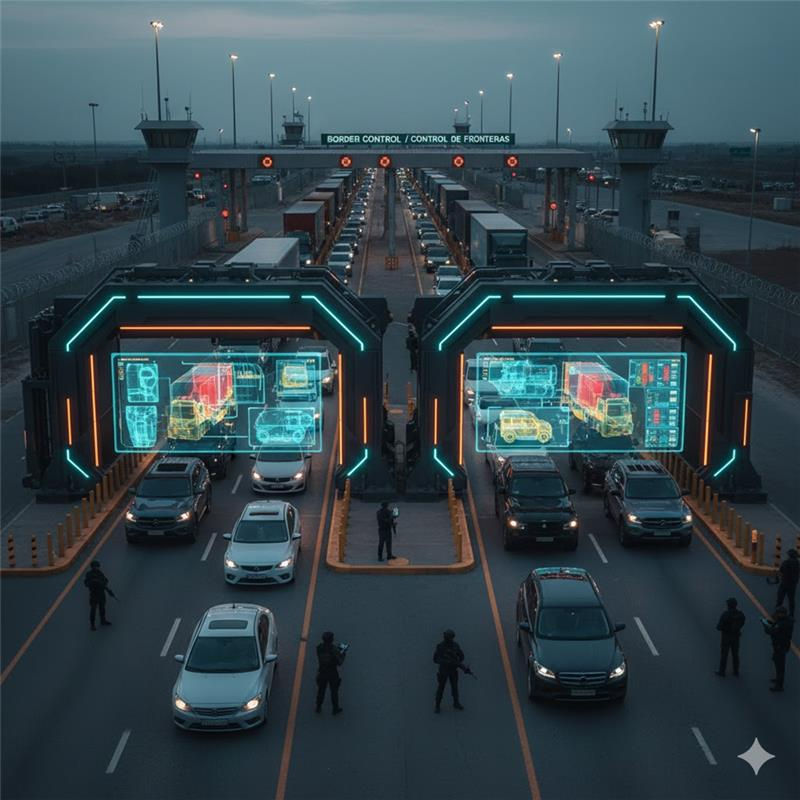
In today’s rapidly evolving security environment, border agencies need fast, accurate and non-intrusive ways to screen vehicles and cargo. SeeThru AI provides advanced imaging and AI-enhanced inspection solutions that help secure borders, streamline trade and improve detection accuracy using modern cargo x ray scanner systems and intelligent analytics.
Modern border crossings must balance two priorities—national security and smooth trade flow. Traditional inspections and manual checks alone are no longer effective for detecting concealed threats. Today’s border crossing x ray machines allow officers to inspect vehicles, sealed containers and trucks without unloading goods, resulting in faster operations and more consistent threat identification.
This guide explains how cargo and vehicle x-ray scanners work, what challenges they solve, and how AI-driven platforms like SeeThru AI’s xGate significantly enhance border inspection performance.
Understanding the Role of Cargo and Vehicle X-Ray Scanning
Why Border Agencies Need Advanced Scanning
Border crossings are critical control points for monitoring the movement of people, vehicles and goods. Without efficient inspection tools, smuggling networks, trafficking operations and other illicit activities can exploit vulnerabilities. A cargo x ray scanner offers a non-intrusive way to see inside dense cargo loads, helping officers detect threats without slowing operations.
Today’s most advanced solutions, such as Seethru AI’s xGate platform, combine high-resolution imaging with machine learning models that classify objects, highlight anomalies and reduce operator fatigue. With global trade projected to expand significantly over the next decade, automated scanning is essential for combating risks associated with:
Illegal weapon movement
Explosives and hazardous materials
Narcotics trafficking
Contraband goods
Human smuggling
Undeclared commercial cargo
With the help of Seethru AI systems, agencies can improve detection accuracy while maintaining compliance with regulatory standards.
How Modern Cargo & Vehicle X-Ray Scanners Work
1. X-Ray Imaging Technology
A core function of any cargo x ray scanner is creating detailed radiographic images of vehicle contents. Depending on the system design, the machine may use single-energy, dual-energy or multi-energy configurations. Dual-energy imaging helps distinguish organic from inorganic materials, making it easier to detect dangerous substances.
2. Transmission and Backscatter Methods
Different systems support different imaging approaches:
Transmission scanning penetrates cargo to reveal internal structures.
Backscatter scanning highlights surface-level anomalies and organic materials.
Hybrid systems combine both for more comprehensive results.
Seethru AI integrates multiple imaging modes depending on checkpoint needs, ensuring high clarity even with densely packed loads.
3. Automated Detection with AI and Analytics
AI-driven border crossing x ray machines help automate threat detection. Algorithms evaluate density, material signatures, object shapes and patterns that may indicate hidden items. They also help maintain consistent inspection quality despite varying operator experience levels.
The xgate system by Seethru AI is designed to automatically flag anomalies, improving both speed and detection accuracy.
4. Real-Time Processing
Border security environments cannot tolerate delays. Modern scanners support real-time image generation and instant analytics. Intelligent prioritization ensures suspicious vehicles get secondary inspection while compliant cargo moves through quickly.

Key Advantages of Using Cargo X-Ray Scanners at Border Crossings
Enhancing National Security
Security threats evolve continuously. Smuggling networks use sophisticated methods to camouflage weapons, currency, drugs and other contraband. Using a cargo x ray scanner at entry points increases the probability of detection and discourages illegal activities.
Seethru AI technologies support advanced pattern recognition, enabling officers to catch concealed materials that may be undetectable through manual checks.
Improving Efficiency and Reducing Congestion
Long queues at border crossings cause economic losses and disrupt supply chains. X-ray scanners enable quicker inspections by eliminating the need to unload cargo manually. With automated detection, operators can clear low-risk cargo in seconds.
Supporting Compliance with International Trade Regulations
Regulatory frameworks often require transparent cargo inspection processes. Digital scanning archives provide traceable evidence of compliance, including:
Scan timestamps
Cargo imaging records
Anomaly reports
Chain-of-custody logs
These features help agencies meet global customs requirements.
Reducing Human Error
Even experienced officers may miss small but critical details during manual checks. AI-assisted border crossing x ray machines reduce reliance on subjective decision-making and help standardize inspection outcomes. Seethru AI’s system enhances consistency by highlighting deviations from normal cargo profiles.
Cost-Effectiveness Over Time
While advanced scanning systems require investment, they significantly reduce labor costs associated with repeated manual inspections. Improved border throughput also minimizes operational expenses and benefits supply chain efficiency.
Types of Cargo and Vehicle X-Ray Scanners Used at Borders
Border agencies use various scanner configurations depending on checkpoint size, threat levels and vehicle types.
Fixed Drive-Through Scanners: These permanent installations scan vehicles as they pass through at controlled speeds. They are ideal for high-traffic crossings with constant cargo movement.
Mobile X-Ray Units: These compact, relocatable systems provide flexibility for temporary checkpoints or low-traffic borders. They are often used during special operations or seasonal peaks.
Portal Scanning Systems: Portal scanners create detailed 3D images, enabling deeper insight into vehicle interiors. They are often integrated with other technologies such as license plate recognition and RFID.
Truck and Container Scanners: Designed for large commercial transport, these scanners allow fast inspection of cargo containers without unloading. Seethru AI’s xGate system enhances container scanning accuracy with smart object recognition.
Multi-Energy Systems: Multi-energy scanners help identify material composition, offering improved detection of explosives and organic contraband.
Manual Inspection vs. X-Ray Scanning
Inspection Type | Accuracy | Time Required | Labor Demand | Ability to Detect Hidden Threats |
Manual Inspection | Moderate | High | High | Low |
Traditional X-Ray (Non-AI) | High | Moderate | Moderate | Moderate |
AI-Enhanced Cargo X-Ray Scanner | Very High | Low | Low | Very High |
The table shows how modern x-ray scanning technology, especially when combined with AI, dramatically improves border screening outcomes.
Integrating AI With Border Screening Operations
AI-driven scanning platforms like those offered by Seethru AI elevate border screening by enabling:
Automated anomaly detection
Reduction of false alarms
Continuous system learning
Uniform inspection quality
Real-time classification of cargo
This reduces workload for officers while improving accuracy and throughput.
Challenges in Border X-Ray Screening and How Technology Solves Them
High Cargo Volume: Busy checkpoints receive thousands of vehicles per day. Automated scanning speeds up regulatory compliance and prevents logistical bottlenecks.
Operator Fatigue: X-ray inspection requires high concentration. AI-powered border crossing x-ray machines reduce cognitive load by flagging suspicious areas automatically.
Complex Cargo Loads: Dense, irregularly shaped cargo can obscure items. Multi-energy imaging and machine learning help compensate for material complexity.
Evolving Threat Trends: Threat signatures change over time. Platforms like Seethru AI’s xGate continuously update detection models to handle new contraband types.
Integrating X-Ray Scanners into Border Infrastructure
Site Planning and Setup
Fixed scanners require optimized spaces for vehicle flow, power supply, radiation protection and environmental safeguards. Seethru AI works with border operators to configure sites for maximum throughput and safety.
Training Requirements
Even with automation, border officers must understand imaging interpretation principles. Training programs typically include:
X-ray physics basics
Reading shaded density images
Spotting anomalies
Operating the software interface
Maintenance and Calibration
Calibration ensures image clarity and system reliability. Routine maintenance schedules include detector checks, mechanical inspections and radiation safety compliance.
Data Storage and Digital Integration
Modern border systems require integration with digital customs infrastructure. Scanned images and anomaly logs are stored securely for audits and legal compliance. Many agencies connect systems to centralized monitoring hubs.
Best Practices for Border Agencies Using X-Ray Scanners
To achieve optimal performance, border authorities follow key practices:
Keep scanning lanes free from obstructions
Optimize scanning speed based on traffic conditions
Use dual-energy imaging for complex cargo
Employ AI-driven analytics to reduce manual workload
Integrate system data with central customs records
Periodically upgrade detection algorithms
Solutions from Seethru AI help implement these practices with more consistency and higher efficiency.
Conclusion
As global trade expands and border threats become more sophisticated, cargo and vehicle x-ray scanning has become a critical component of modern border control. A well-implemented cargo x ray scanner improves security, speeds up inspections and delivers accurate, consistent results—far beyond what manual checks can provide.
AI-enhanced border crossing x ray machines reduce operator burden, improve detection rates and support a transparent, compliant inspection process. Agencies looking to upgrade or deploy new scanning solutions can explore the resources and technologies offered by SeeThru AI to strengthen national security while maintaining efficient trade operations.
Frequently Asked Questions (FAQ)
What is a cargo x ray scanner?
It is a non-intrusive inspection system used to scan trucks, containers and vehicles at borders. It generates radiographic images to detect concealed threats.
How do border crossing x ray machines improve security?
They help officers identify smuggled goods, weapons and dangerous materials using high-resolution imaging and automated detection tools.
Are vehicle x-ray systems safe for drivers?
Yes. Modern systems follow international radiation safety standards. Drivers typically exit the vehicle before scanning, or dose levels are kept extremely low.
Do these scanners slow down border processing?
No. They speed up processing by reducing the need for manual inspection, allowing compliant cargo to pass through more quickly.
Can x-ray scanners detect organic materials?
Dual-energy and multi-energy scanners can distinguish organic from inorganic materials, helping identify drugs, explosives and other contraband.




Comments